
Service and assistive robots
An institutional robot should be selected from the workflow it must support: visitor wayfinding, remote presence, internal delivery, activities or cleaning automation.
The catalog includes eight official models for reception, interactive service, telepresence, institutional and food delivery, social education and autonomous cleaning.
Comparison starts with the real environment: routes, doors, elevators, surfaces, charging points, connectivity and operating owners. Each function is then validated against manufacturer documentation.
I-ME structures commercial and technical scope by project. Runtime, integration, accessories and commissioning are confirmed for the quoted model.
How to structure an institutional purchase
Use this guide to prepare a comparable request. It does not replace clinical or technical assessment, nor manufacturer documentation.
- Define task, route, users and operating owner before comparing models.
- Survey doors, elevators, slopes, surfaces, network and charging points in the real environment.
- Validate navigation, integration, runtime, accessories, support and commissioning per model.
For each SKU, I-ME confirms applicable documentation, commercial scope and support conditions. INVIMA organizes medical-device and biomedical-equipment requirements throughout their lifecycle; WHO recommends integrating inspection and preventive and corrective maintenance into equipment management.
Service and assistive robots equipment
Service and assistive robots · Reception and customer service robots
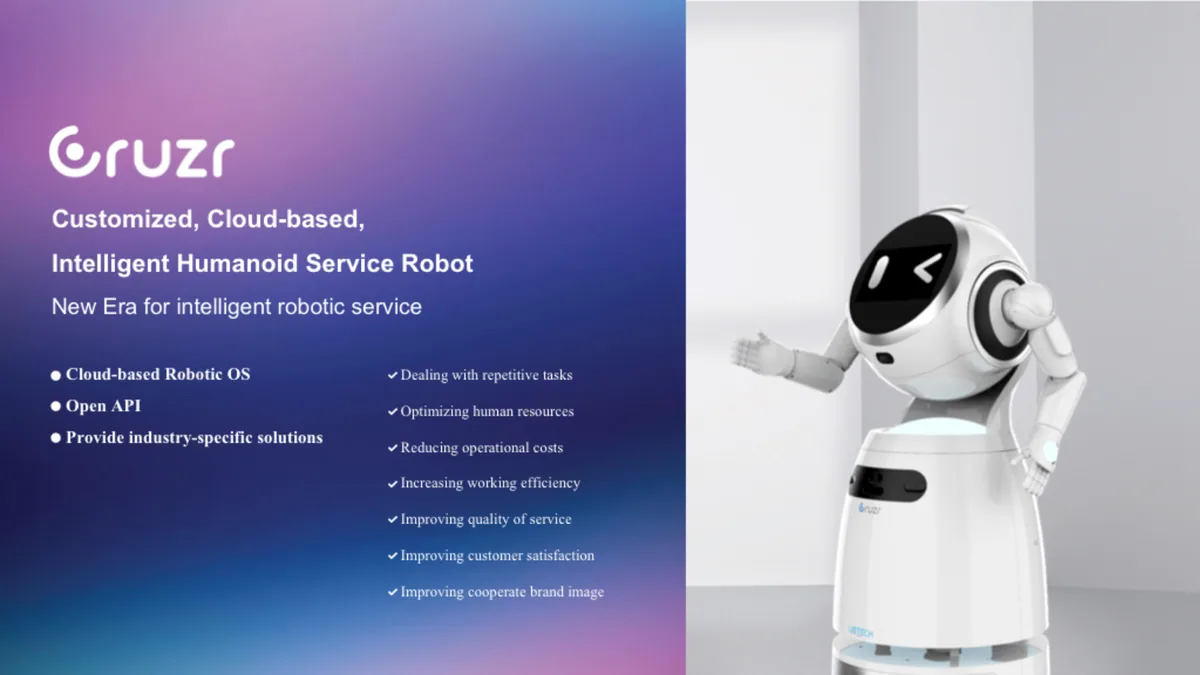
Cruzr Intelligent Commercial Service Robot AHuman Future
Cloud-based humanoid commercial service robot for reception, visitor interaction and personalized institutional experiences.
View details
Service and assistive robots · Reception and customer service robots
PadBot X3 Reception Robot
Reception robot with 19-inch body screen, face recognition, voice interaction, map navigation and remote video support.
View details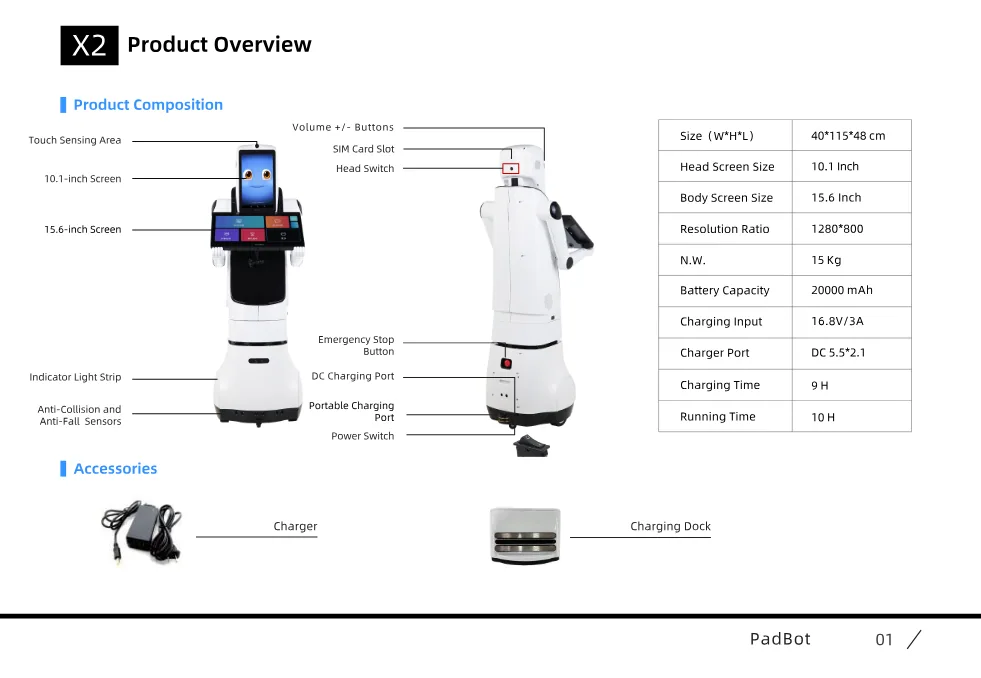
Service and assistive robots · Reception and customer service robots
PadBot X2 Interactive Service Robot
Interactive service robot with 10.1-inch head screen, 15.6-inch body screen, 4G/WiFi and autonomous map navigation.
View details
Service and assistive robots · Telepresence robots
PadBot P2 Telepresence Robot
Foldable telepresence robot with 10-inch HD screen, WiFi/4G, video calling, remote control and auto charging.
View details
Service and assistive robots · Institutional delivery robots
PadBot W2 Institutional Delivery Robot
Delivery robot with locker, 10.1-inch screen, map navigation, 4G/WiFi, anti-collision sensors and charging dock.
View details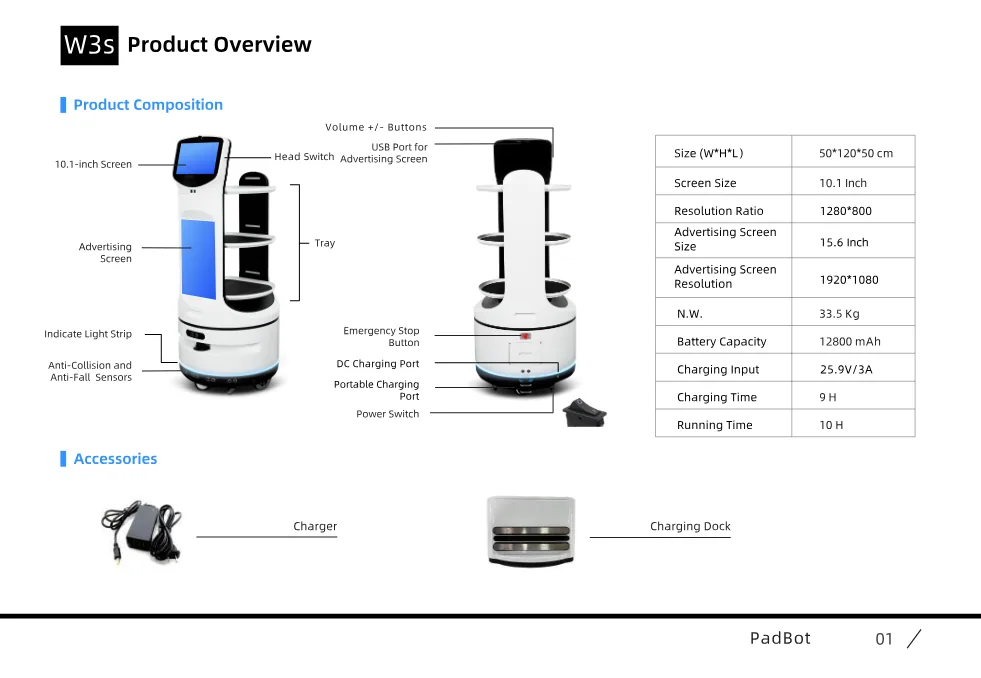
Service and assistive robots · Food delivery robots
PadBot W3s Food Delivery Robot
Food delivery robot with tray, 15.6-inch advertising screen, maps with kitchen and return points, 4G/WiFi and charging dock.
View details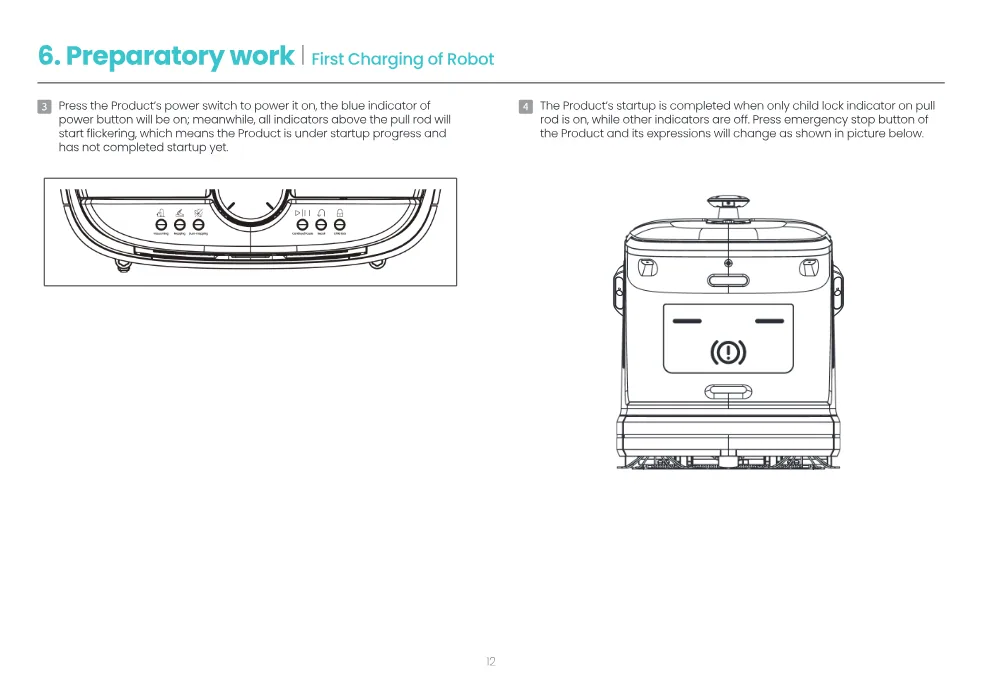
Service and assistive robots · Autonomous cleaning robots
C3 Autonomous Cleaning Robot
Indoor hard-floor cleaning robot with vacuuming, mopping, dust-mopping, multifunction charging dock and clean/sewage water management.
View details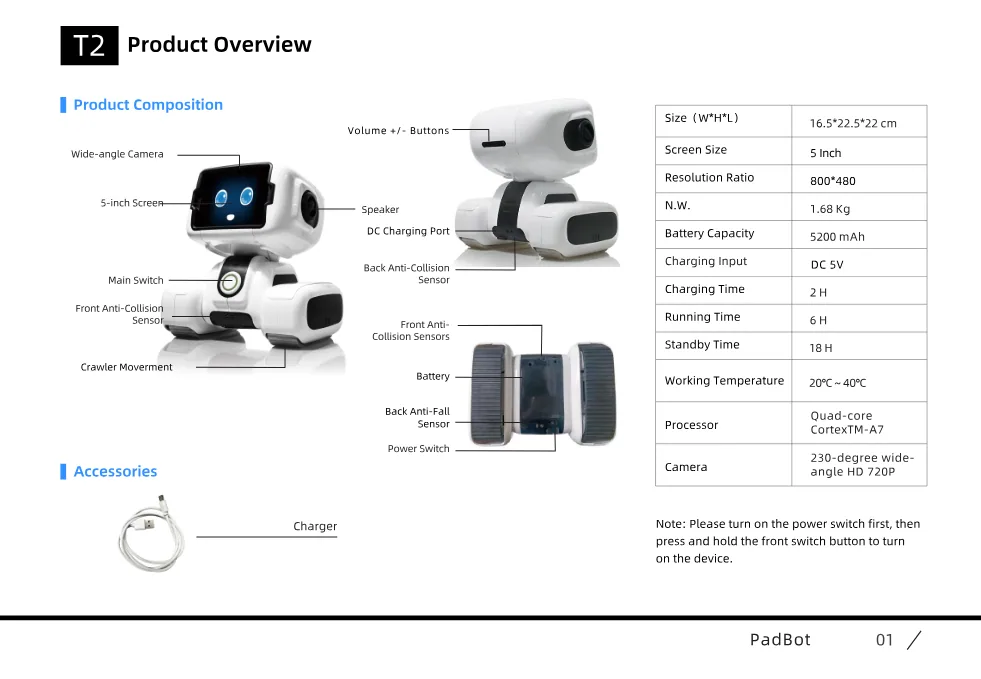
Service and assistive robots · Educational and social robots
PadBot T2 Educational and Social Robot
Compact social robot with 5-inch screen, voice interaction, 720P wide-angle camera, games, video calling and app control.
View detailsFAQ
What type of robot does an institution need?
It depends on the target workflow. Reception, telepresence, delivery and cleaning are different categories; first document route, interaction and operating owner.
Can it integrate with elevators or existing systems?
Integration depends on model and infrastructure. It is confirmed through manufacturer documentation and project technical review.