
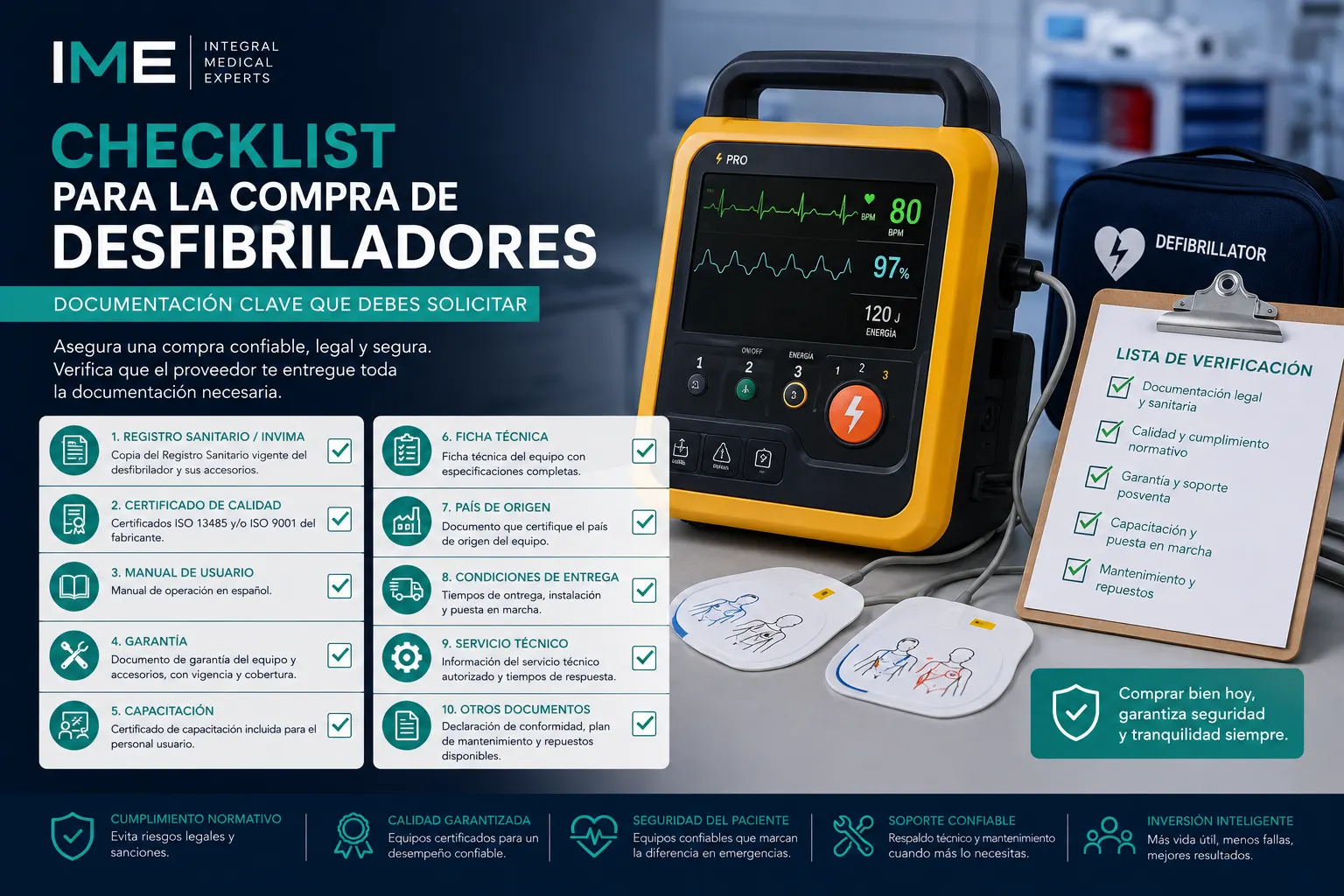
Why buying a defibrillator is not only “the device”
In ED, OR and critical areas, a defibrillator is a continuity asset. The institutional decision must cover intended use, documentation, training, consumables and support — not list price alone.
Use this checklist with the [cardiology / resuscitation](/en/families/cardiologia-reanimacion/) family and the [biphasic defibrillator with monitor](/en/products/desfibrilador-bifasico-con-monitor) sheet.
Checklist before requesting a quote
- [ ] Use area (ED, ICU, OR, ambulance, public area).
- [ ] Operator profile and training plan.
- [ ] Need for integrated monitor / ECG / printing.
- [ ] AED vs manual mode (per institutional protocol).
- [ ] Consumables (pads, batteries, paper) and estimated lifespan.
- [ ] Applicable regulatory docs and technical sheets.
- [ ] Install, commissioning and maintenance scope.
- [ ] Internal owner for inventory and periodic checks.
What to request in the quote (minimum)
- Exact reference and configuration.
- Included vs optional accessories list.
- Warranty terms and support response times.
- Initial training (who, hours, site).
- Documentary evidence available for the purchasing file.
Red flags
- Quote without consumables breakdown.
- Generic clinical promises without a sheet.
- No training or maintenance plan.
- “Compatible with everything” without validating your protocol.
Next step with I-ME
Review alternatives in [cardiology / resuscitation](/en/families/cardiologia-reanimacion/), contrast the [biphasic defibrillator with monitor](/en/products/desfibrilador-bifasico-con-monitor) sheet and request a scoped quote via [contact](/en/contact/).
FAQ
Is an “INVIMA certified” ad enough?
No. Confirm documentation applicable to the exact reference in the purchasing file — do not rely on marketing headlines alone.
Should you buy the most advanced model?
Only if the service can operate it, maintain it and sustain consumables. Unused capability is dead CapEx.