
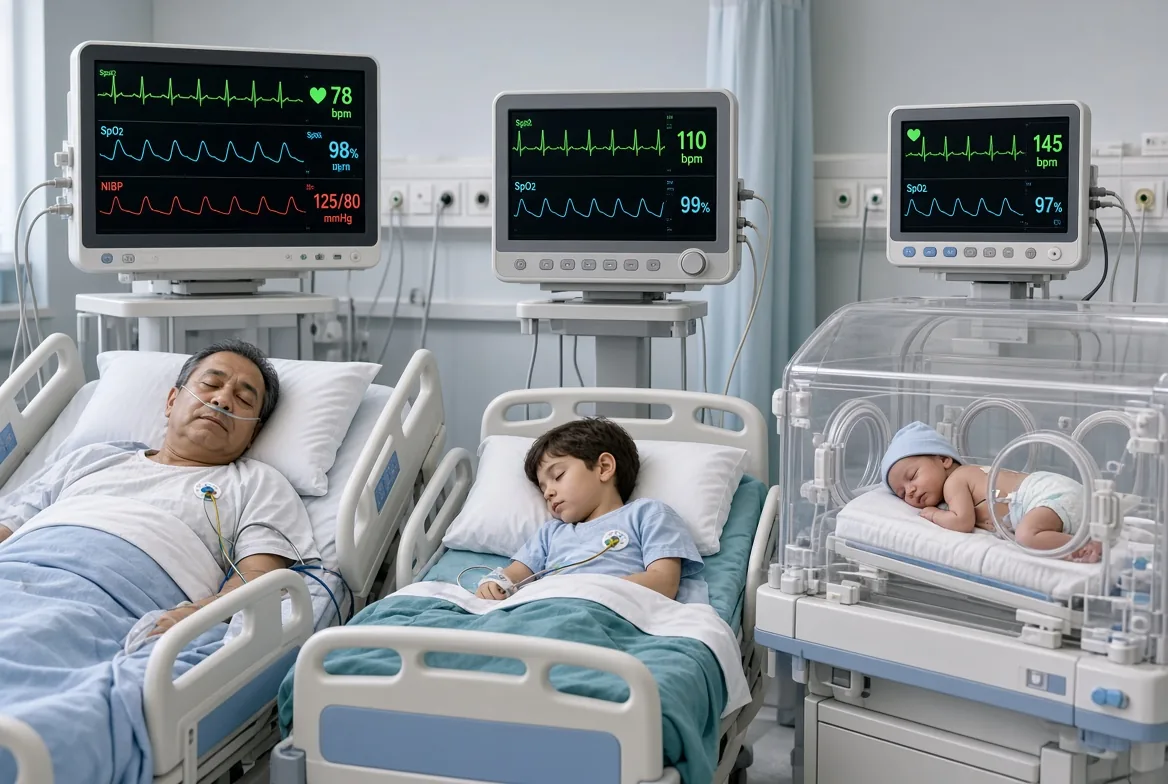
One monitor, three patient types
Many multiparameter monitors can serve adults, children and neonates. What changes are the accessories, the alarm ranges and the configuration. If those differences are not planned at purchase, the equipment arrives without the right sensors or with alarms set for a different patient.
Content validated by I-ME's clinical engineering team (September 24, 2026). It does not replace your institution's clinical protocols: alarm values are set by the unit.
Adult ICU
- Adult-size SpO₂ sensors and NIBP cuffs.
- Typical adult alarm ranges.
- General-purpose invasive pressure (IBP) and EtCO₂ modules.
Pediatric ICU
- Pediatric-size NIBP cuffs and SpO₂ sensors.
- Alarm ranges adjusted to pediatric reference values; for example, higher heart and respiratory rates than in adults.
- Arrhythmia and SpO₂ algorithms optimized for children, where the equipment includes them.
Neonatal ICU
- High-sensitivity neonatal SpO₂ sensors.
- Neonatal or micro-size NIBP cuffs, and smaller ECG electrodes.
- Specific alarm ranges: tighter saturation margins and a higher heart rate.
- On many units, "Neo" modules or modes that limit NIBP measurement energy and optimize signal filtering.
What doesn't change: configuration matters as much as hardware
One unit can serve all three groups if the accessories are available and the preset patient profiles are configured correctly. So it pays to:
- Include the accessories in each size the unit needs in the quote, not just adult ones.
- Configure the profiles and alarm limits per the unit's protocol during installation, instead of leaving factory defaults.
- Plan for specific accessories (cribs, mounts) and differentiated training for each unit's staff.
Keep reading
- Complete guide to hospital multiparameter monitors
- Checklist for receiving and installing a hospital patient monitor
If you are equipping a pediatric or neonatal unit, talk to an I-ME advisor to define the accessories from the quote stage.